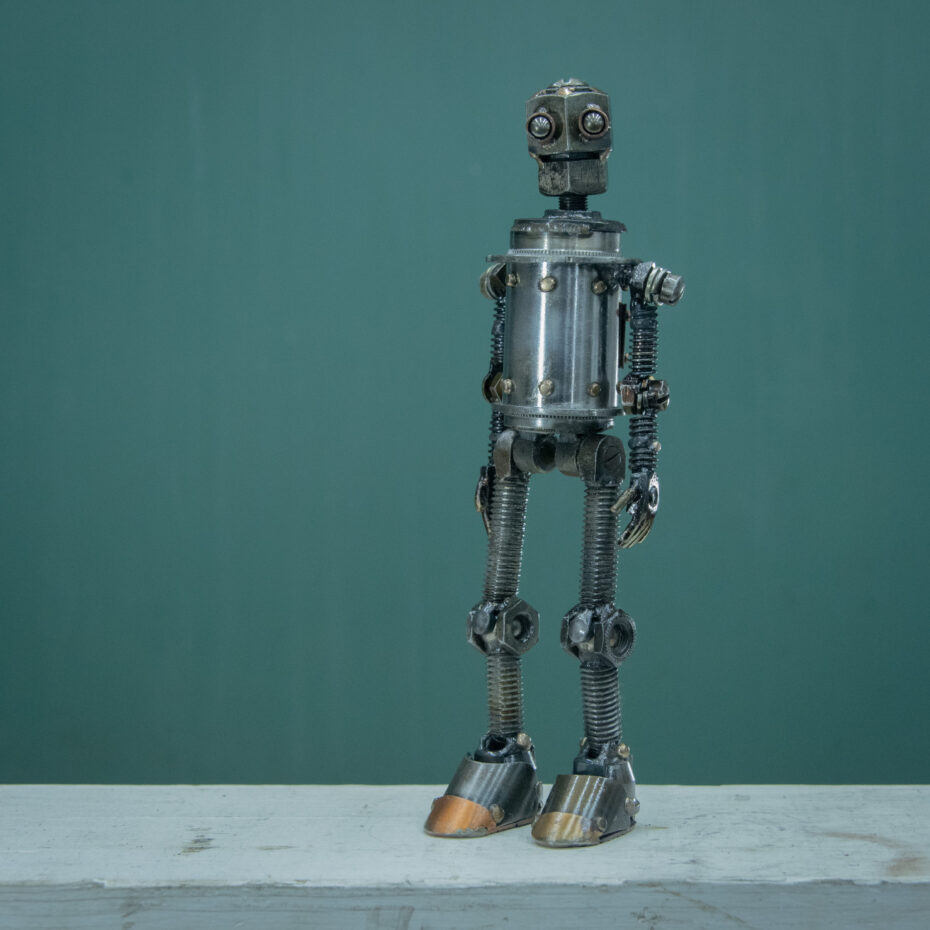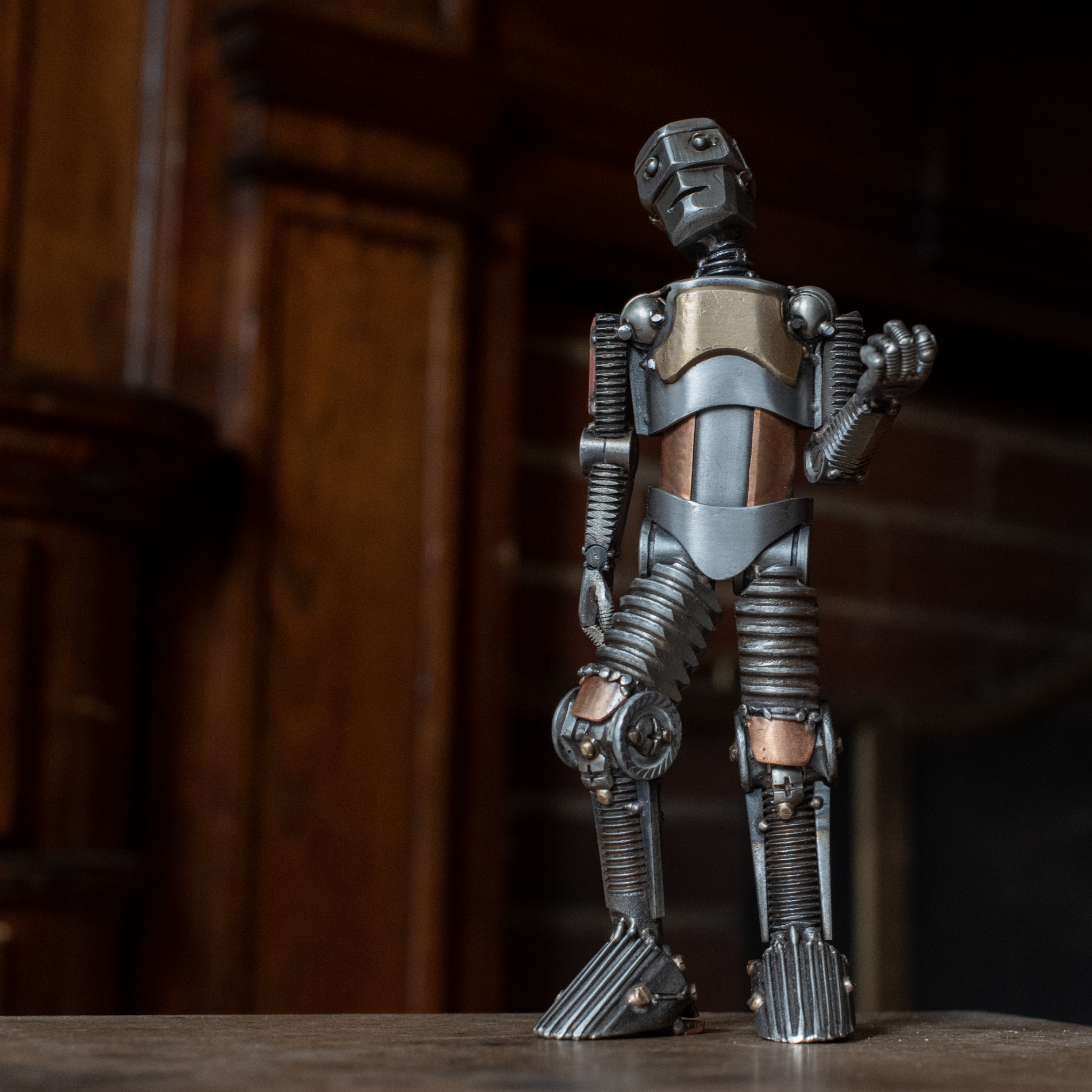


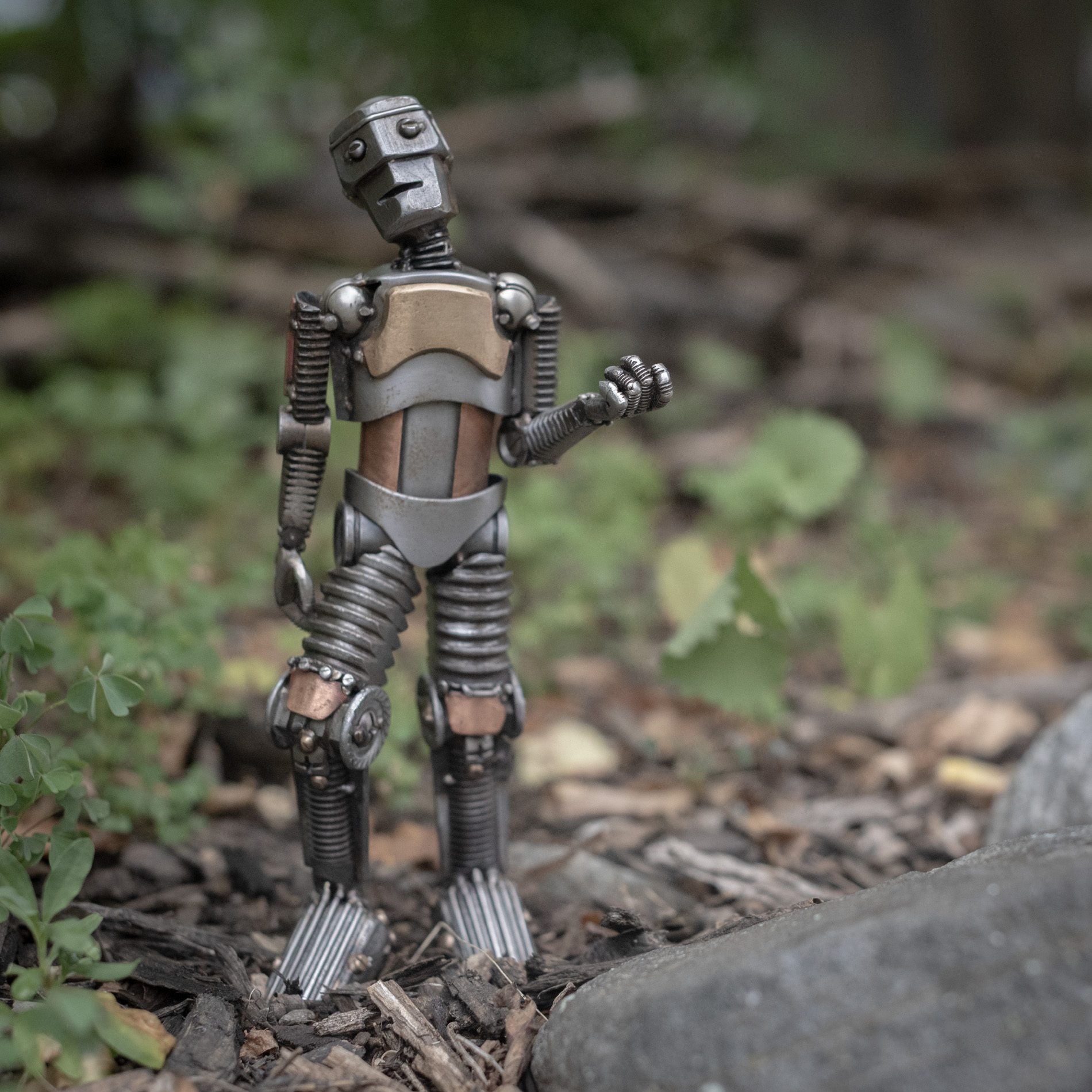
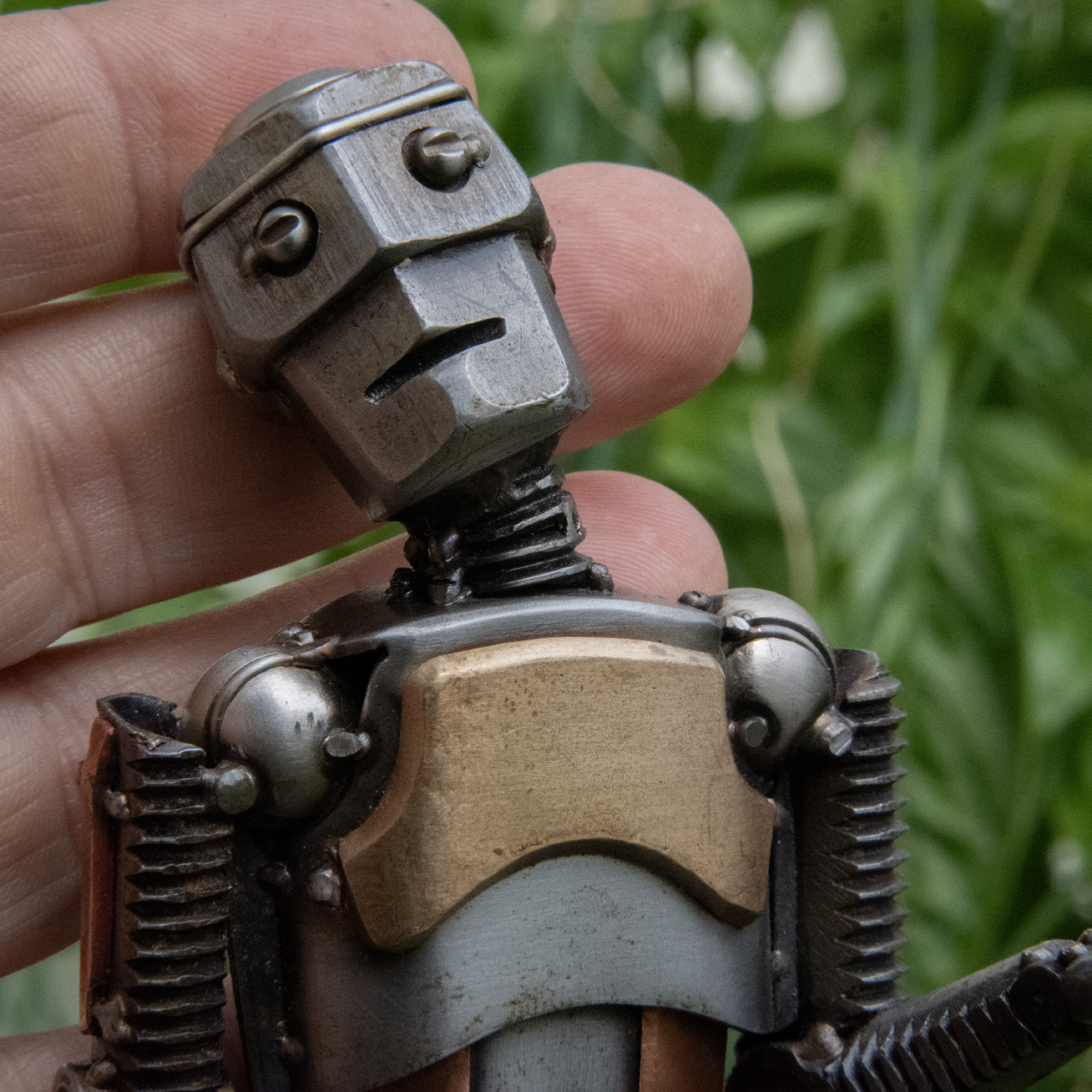
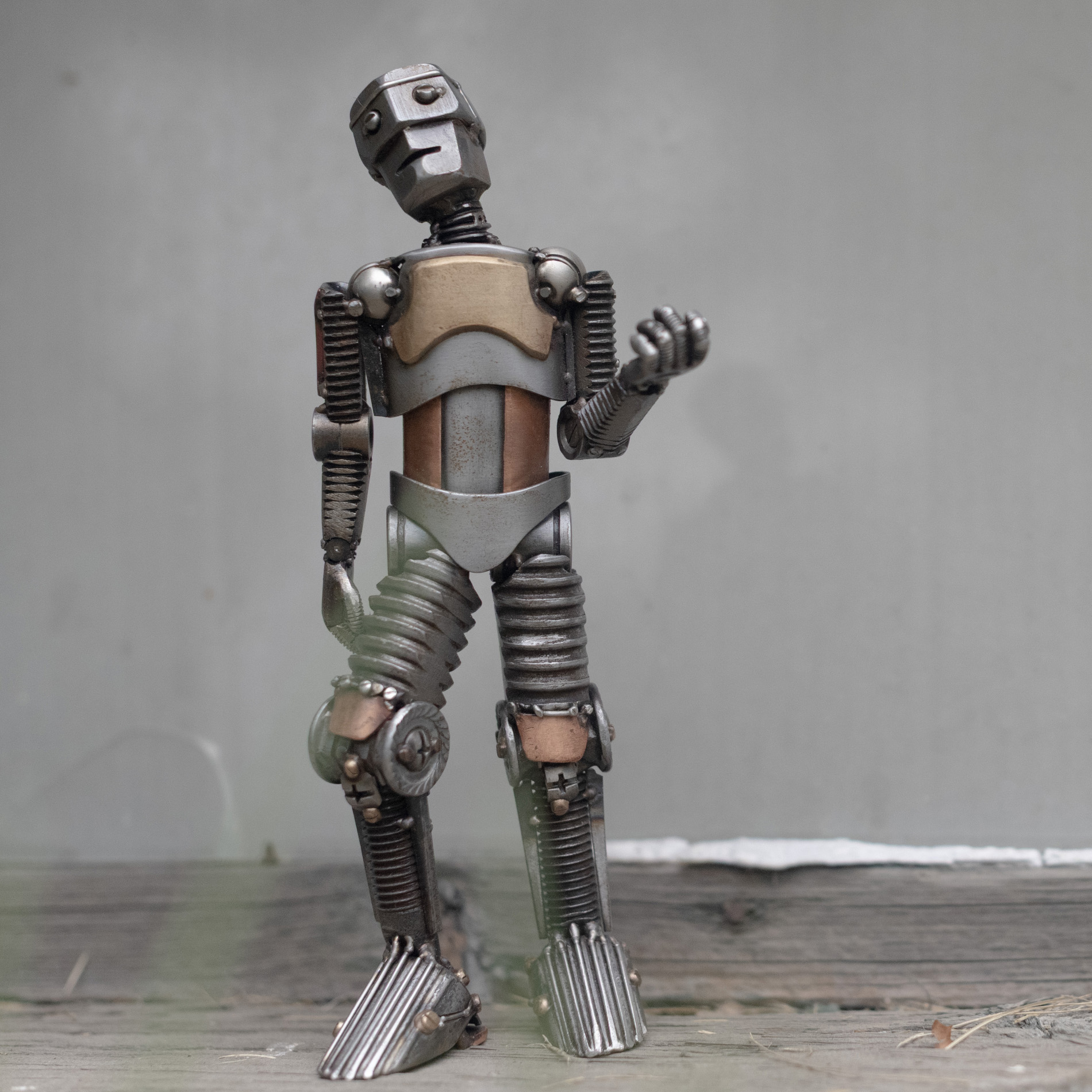
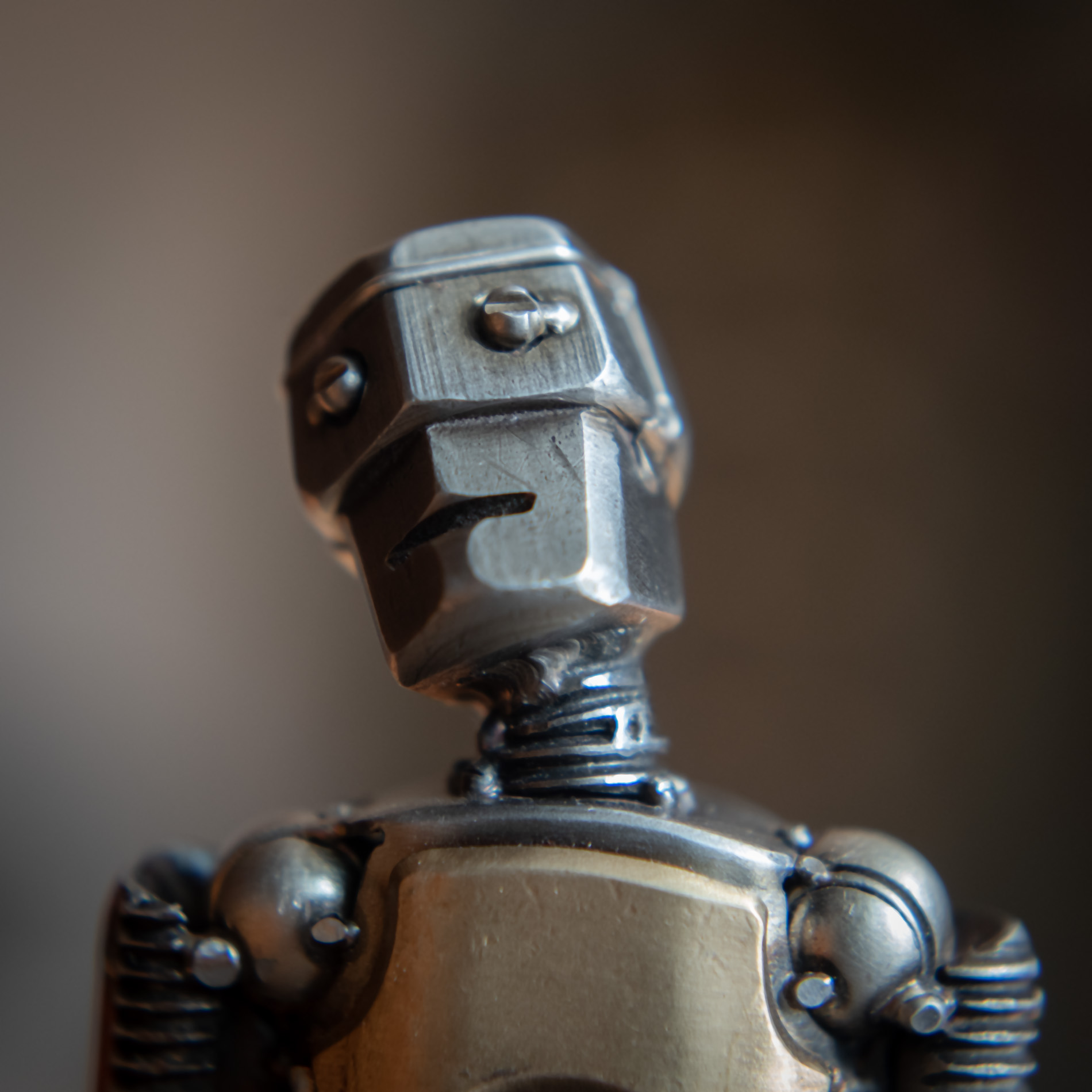


Moss 430
How to make a masterpiece
TL;DR Start by trying to make a masterpiece
A ‘masterpiece’ is a work of art by an artist that has been given lots of critical praise, particularly when it is considered the greatest work of an artist’s career or a work of outstanding creativity, skill, profundity and craft. By definition, a masterpiece cannot be declared solely by the artist, as it is up to others to decide if a piece qualifies. That being said, an artist who chooses to try to make a masterpiece is more likely to make one than an artists who does not try. After four hundred twenty-nine figures, I decided that it was time to take my shot.
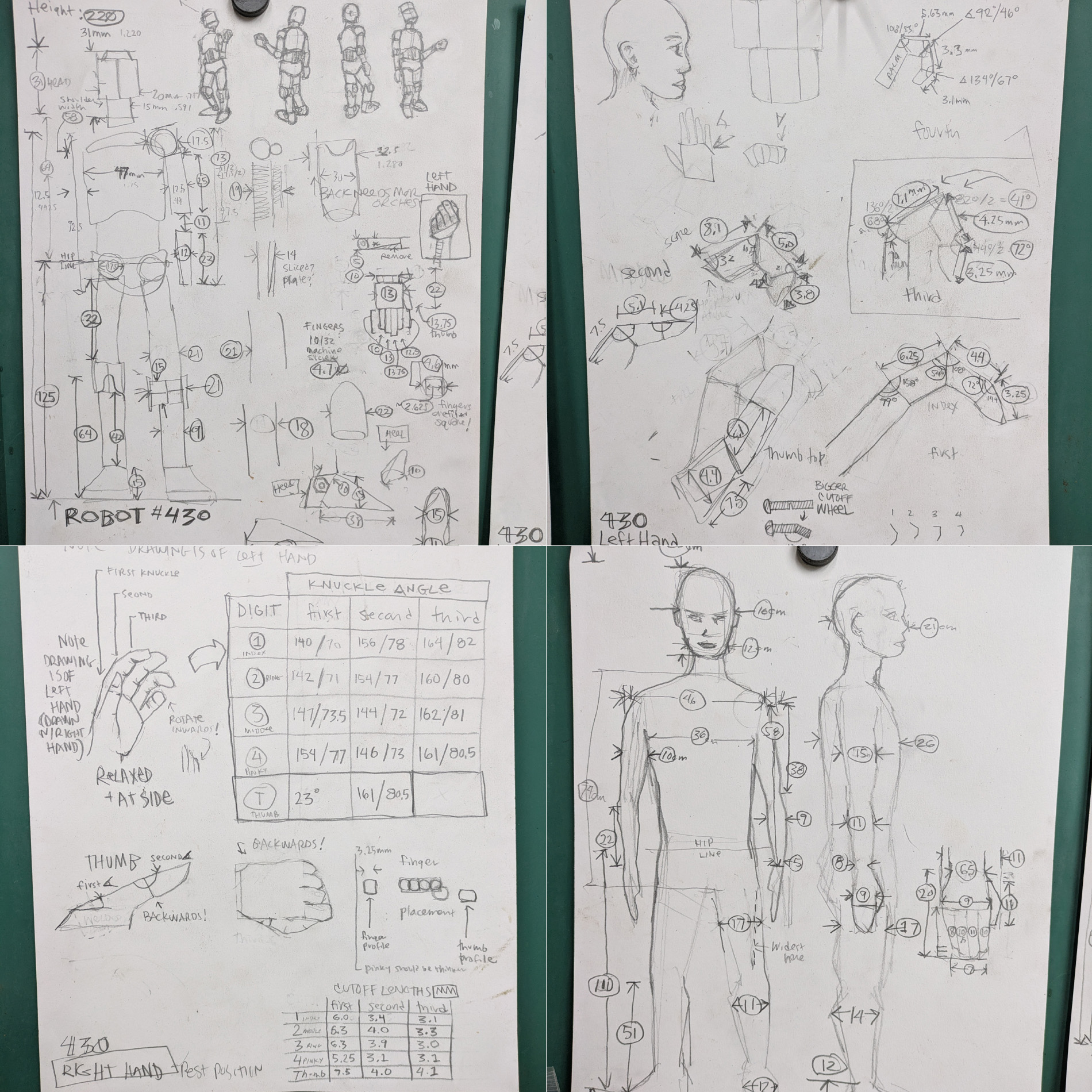
Lots of planning went into the design of Moss
How do you begin? For me, it was re-examining everything I’ve learned about making art and working metal. It means putting in as much time as needed without compromise. It means examining every facet of the piece with absolute scrutiny, using a magnifier and calipers. It means asking myself at each small step, “Is there more I can do to make this better?” “Is this the absolute best I can do?”. And – here’s the hardest part – be honest and be prepared to make it right no matter how long it takes or how hard it is – even if it means taking risks and making rework.
For nine solid months, I worked on this figure under these new uncompromising guidelines. I didn’t make other pieces during that time. Needless to say it was not a trivial decision, it was not easy. But it was the right thing to do.
I took everything I learned from making all my previous pieces especially, Marjorie m430 and channeled it into this new one. Marjorie was the catalyst and the awakening of so many new concepts, and she is the transitional work that spans two personal art periods – the end of Skunkadelia and the beginning of Laark. Moss is the first Laark piece to fully embrace all the new techniques learned from the deep endeavors of pushing my art and my craft to the limits.
No detail overlooked
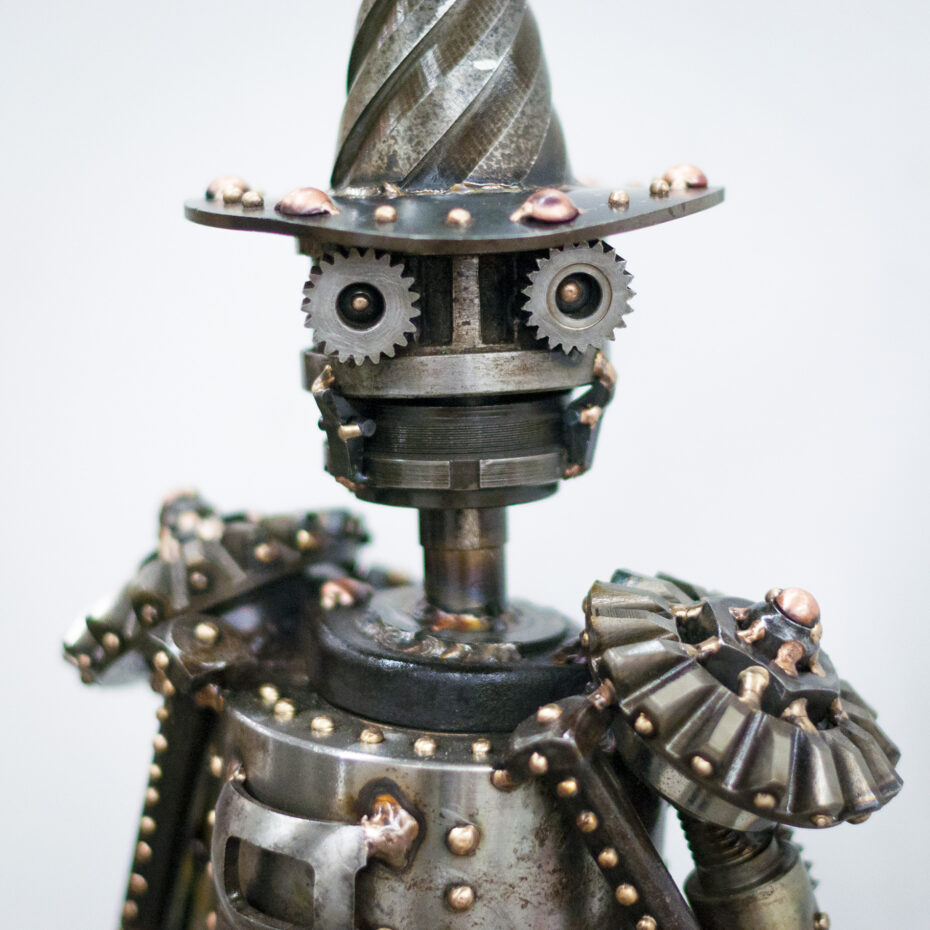
Moss does not give away all his secrets at once. This work is loaded with details small enough to be overlooked at first. In order to fully understand the amount of work required to make him, you need to take a very close look.
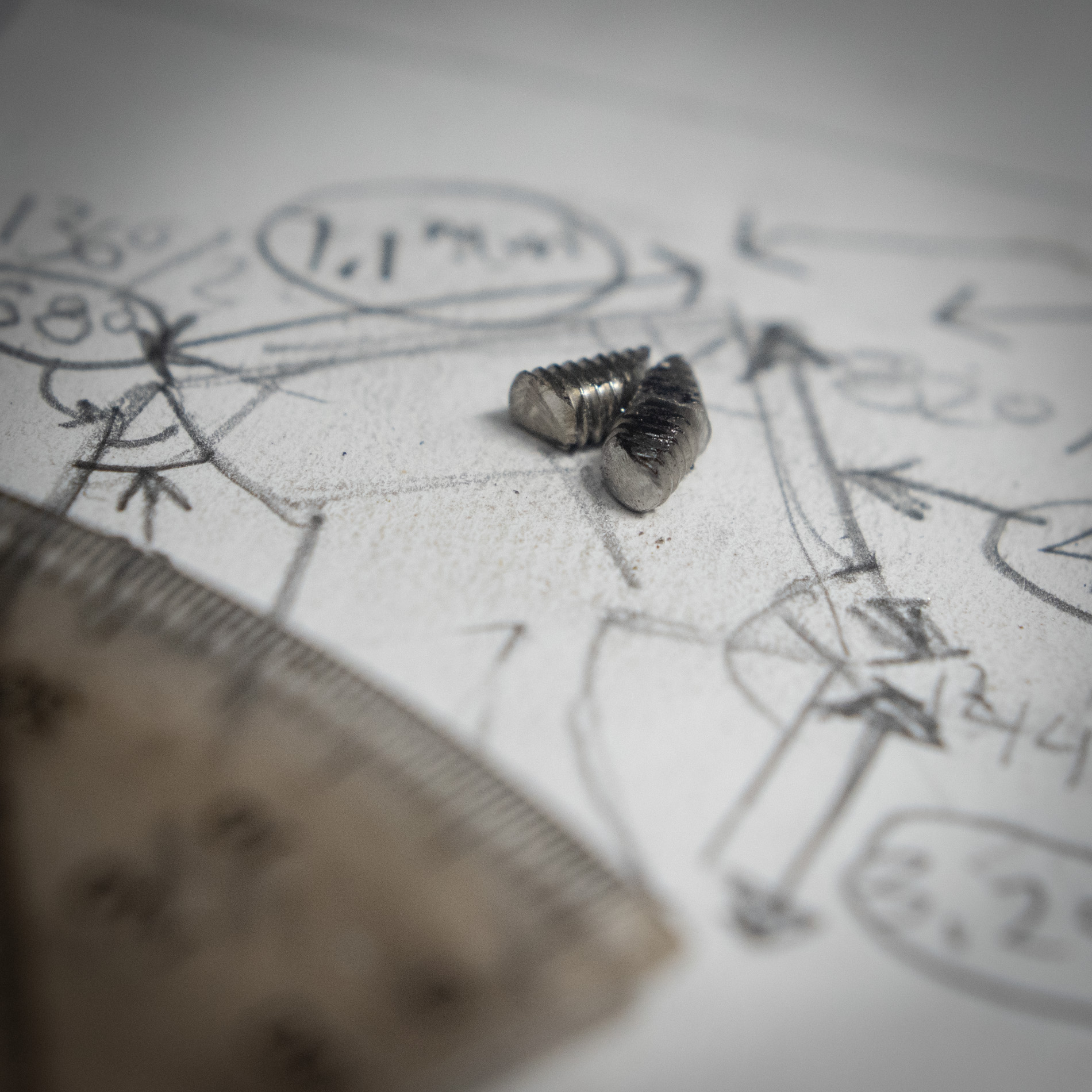
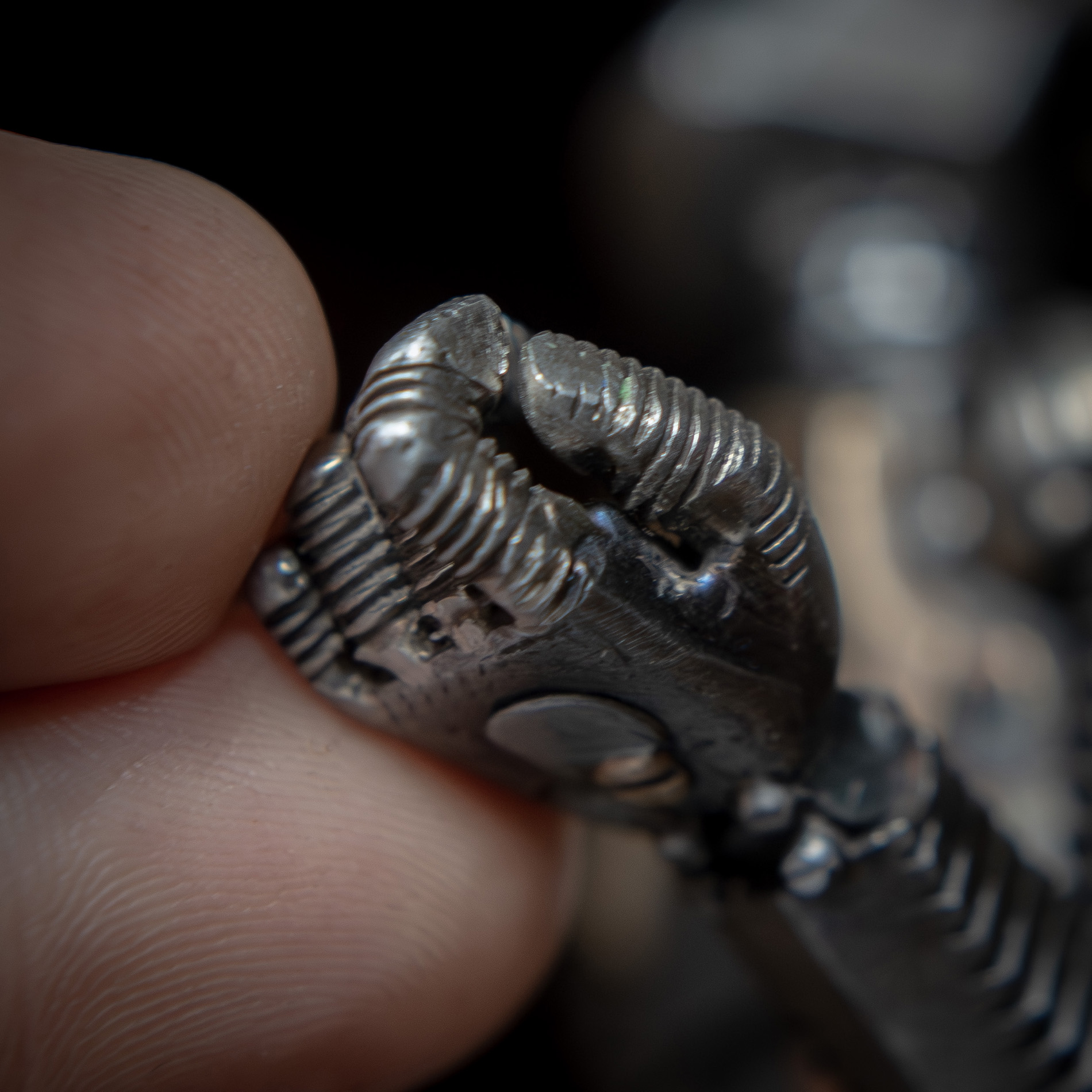
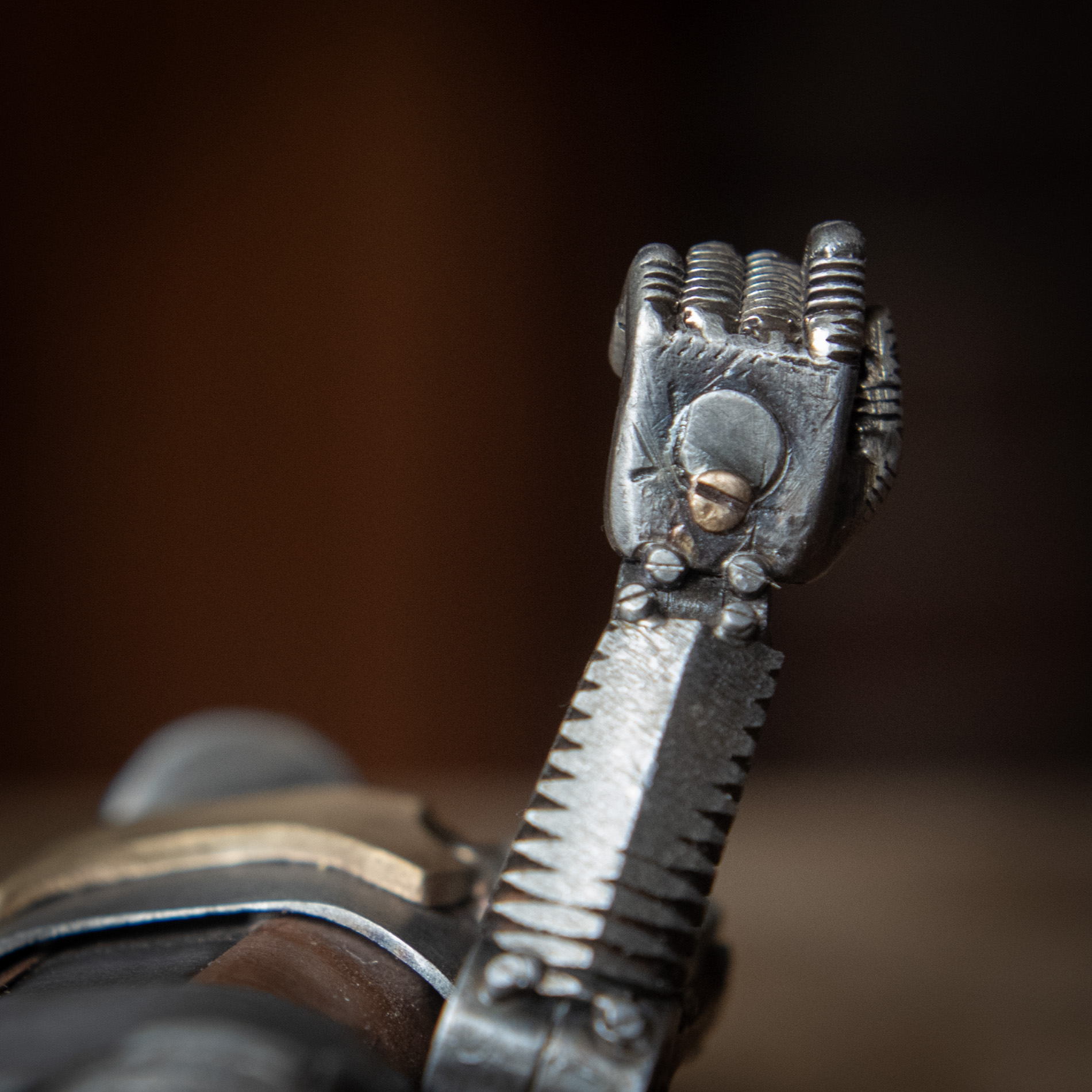
The left hand of Moss is made from seventeen precisely hand-cut pieces
For example, each section of finger on Moss’ closed left hand was cut and angled from a teeny machine screw, faceted to precise angles to form each finger. Each piece is between three and seven millimeters long, TIG welded together at the correct angle and position. Each time I struck the arc on these pieces was an intense and risky endeavor as things can very easily go wrong at each step. I tried to remember to breathe.
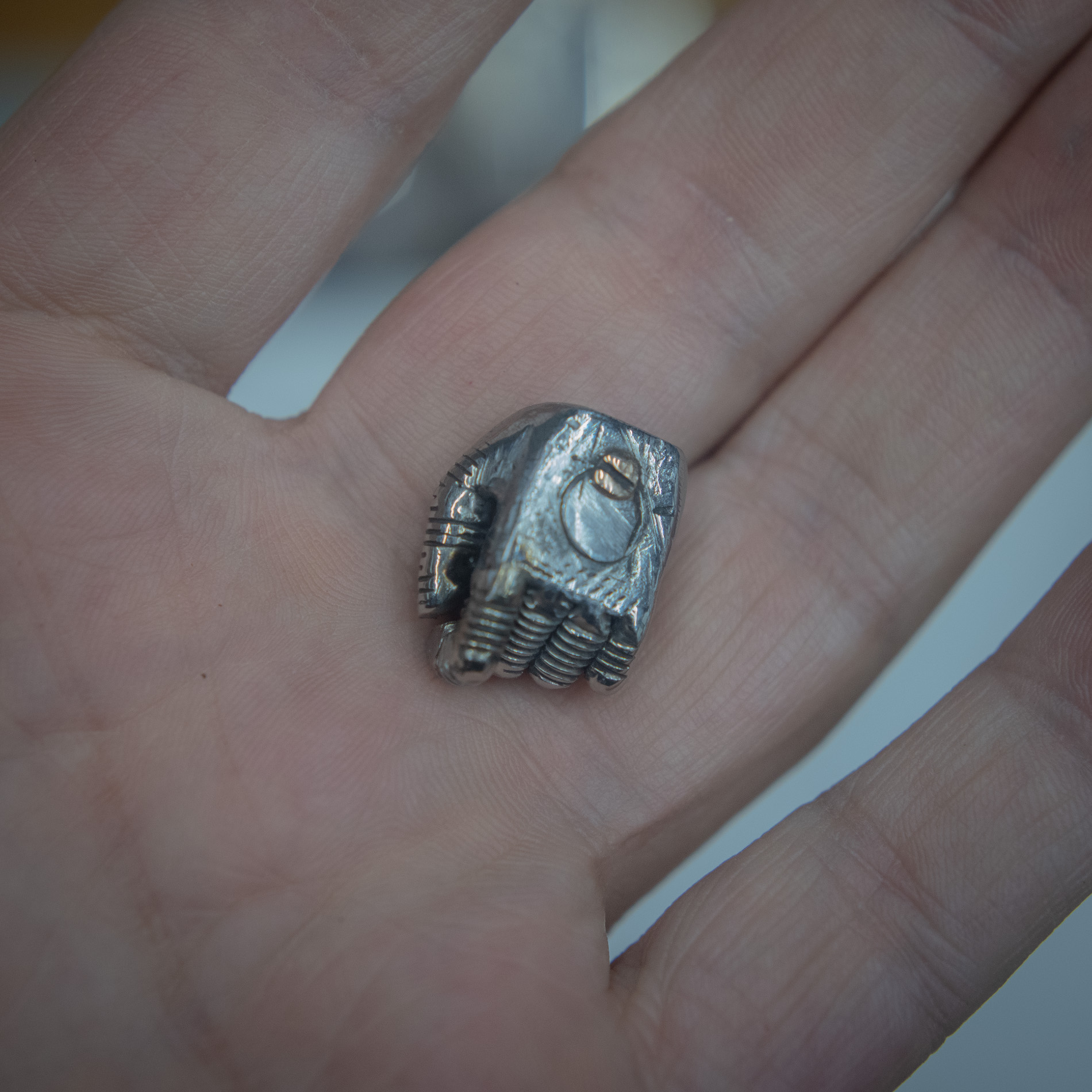
This one element took about a month for me to figure out how to make.
Is robot flesh ‘soft’?
As someone who has created hundreds of figures, I would have thought that I had all the fundamental questions answered, but this one caused a paradigm shift. If a figure that I am sculpting presses against its own flesh, does the flesh move? Or is the steel solid? For Moss, I was trying to go for the most human qualities a robot could manage. I also asked myself – which is harder to do? These two questions let me to choose to have the flesh ‘soft’. Moss’ upper arm has a slot filed into it, in order to press into the torso snugly, implying the ‘flesh’ changed shape to ‘squish’ up against itself. Without this accommodation, the arm would not have rested as closely to the body. Most people who see Moss wouldn’t notice this small subtlety, but every step towards realism helps the subconscious mind grant suspension of disbelief that Moss has a soul. And with figure sculpture, the subtlest of details is the key to conjuring life-like synergy, just as easily as they can create dips into uncanny valley.

Since it’s more challenging to make the flesh ‘soft’ – and more human – Moss was made as if his flesh is soft.
Junk metal sculpture on overdrive
When people think of junk metal sculpture, people imagine ordinary, easily recognized metal elements cobbled together to make something resembling an object such as a rough caricature, or a goofy animal. My early work fits in that realm nicely. It’s easy to forget that Moss is made from the very same rusty used metal. Is it the extra sawing and filing that separates Moss from the crowd? Is it precision? Where is the line drawn between junk metal sculpture and whatever it is that I’m doing?
Many people who are accustomed to seeing figures of this size may not understand the challenges of making him out of scrap metal. There are many techniques that may be better suited to creating figures with this much detail – casting bronze, carving wood, and even 3D printing. And these processes lend themselves to making beautiful works of art in their own realm. For those who have picked up a TIG torch in their day, Moss is nothing short of a absolute flex of TIG welding that only comes with decades of relentlessly pursuing excellence.
As for the pose
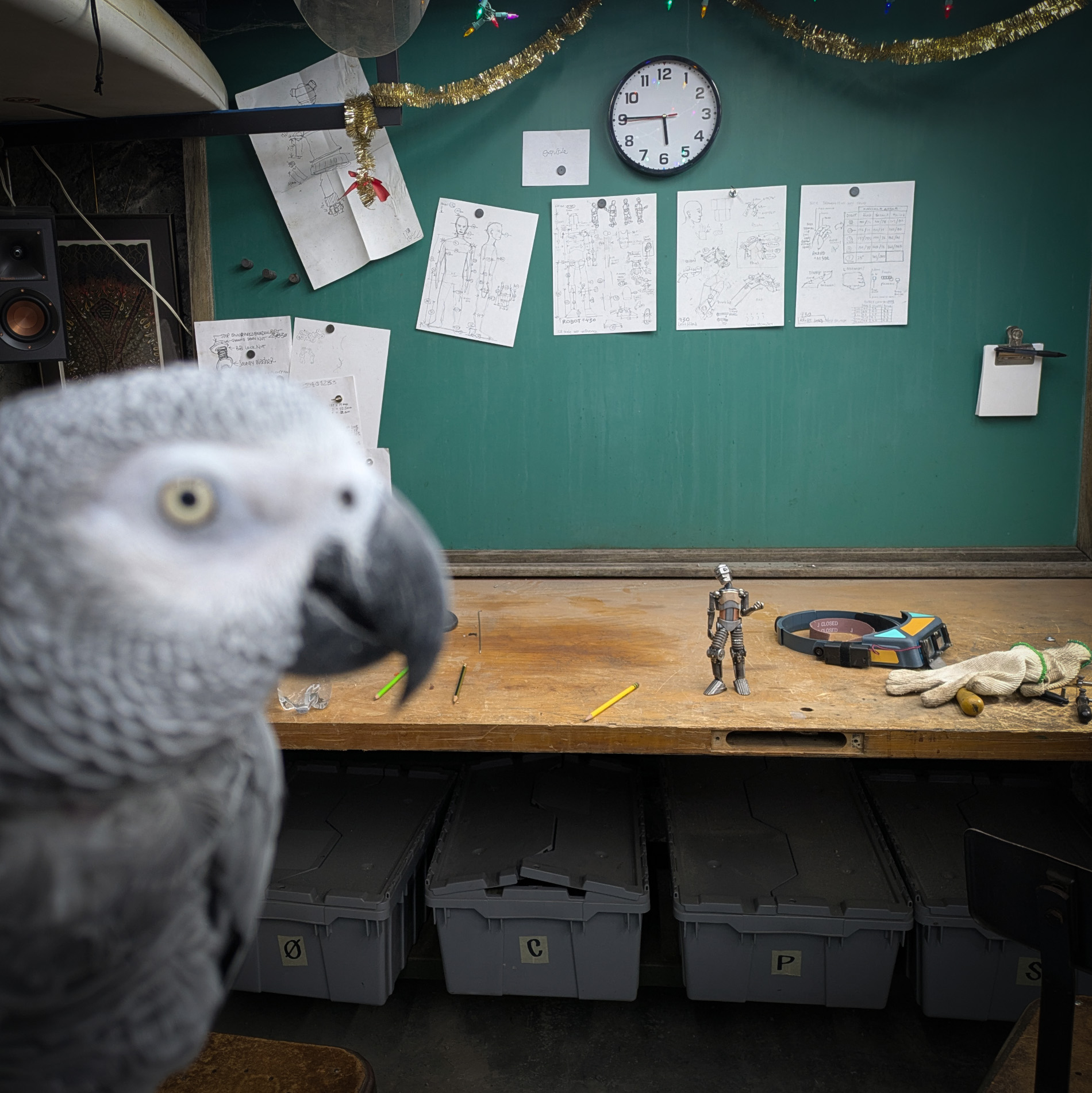
What is Moss saying to you?
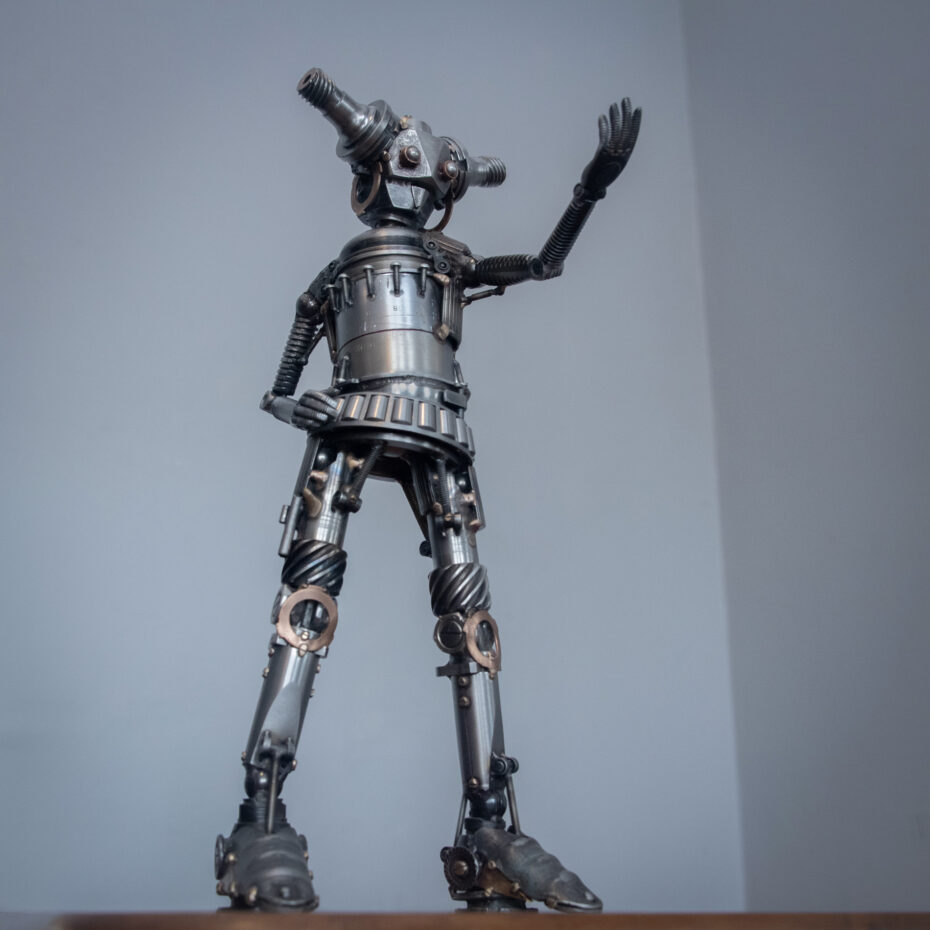
I have chosen to not share the meaning behind Moss’ pose, although I will say that I took great care in choosing it, and it has meaning for me. I’m curious to know what Moss is saying to you.

Typically I add the name on a back boilerplate but this one’s mark is subtly hidden
While Moss is the 430th figure I have made, it is the very first to bear the new name Laark, shedding the old ‘Skunkadelia’ mark. Because for me, Moss is the one work who pioneered all the first methods of a new era for me as a metalworker, and as an artist with intent. If you look at work after Moss you will see many things learned here.
Can I say that Moss is a true masterpiece? No, I cannot. I can only leave it to art beholders to decide.
Completed 12 August 2025
1 lb, 5.9 oz.
8 x 3.5 x 2.25″
$9,200.00
Available