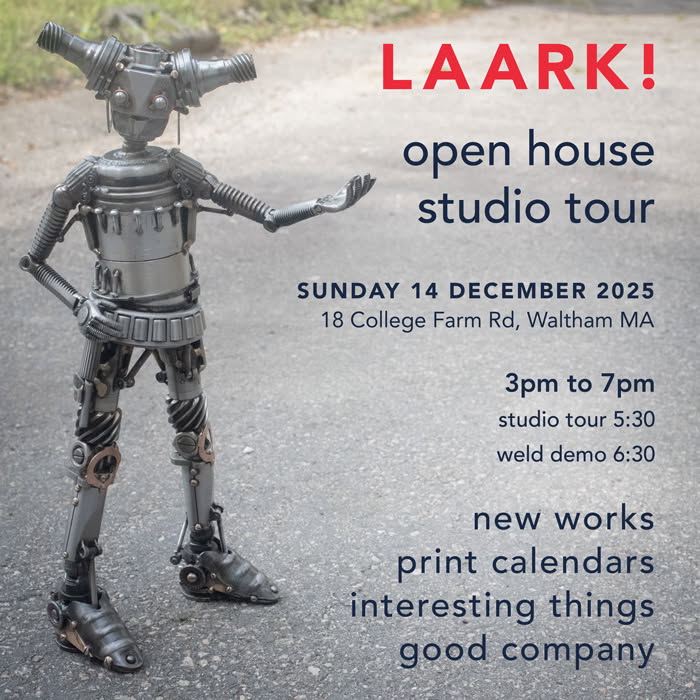
Sunday 14 December 2025
18 College Farm Road Waltham, MA
3pm to 7pm
studio tour 5:30
weld demo 6:30
Act One: The Preparation
This event was a particularly special one for me – it was the first public showing in over six years, and the first show under the new name Laark.
Pedestals
My living room and home office is a great place to hold art, I wanted the new pieces to be more of the focal point than usual. Fortunately I still have the bike-friendly collapsible pedestals I made for shows at the Nave Gallery, Arisia, and various group art shows, and even a solo show at Mobius Gallery in Cambridge.
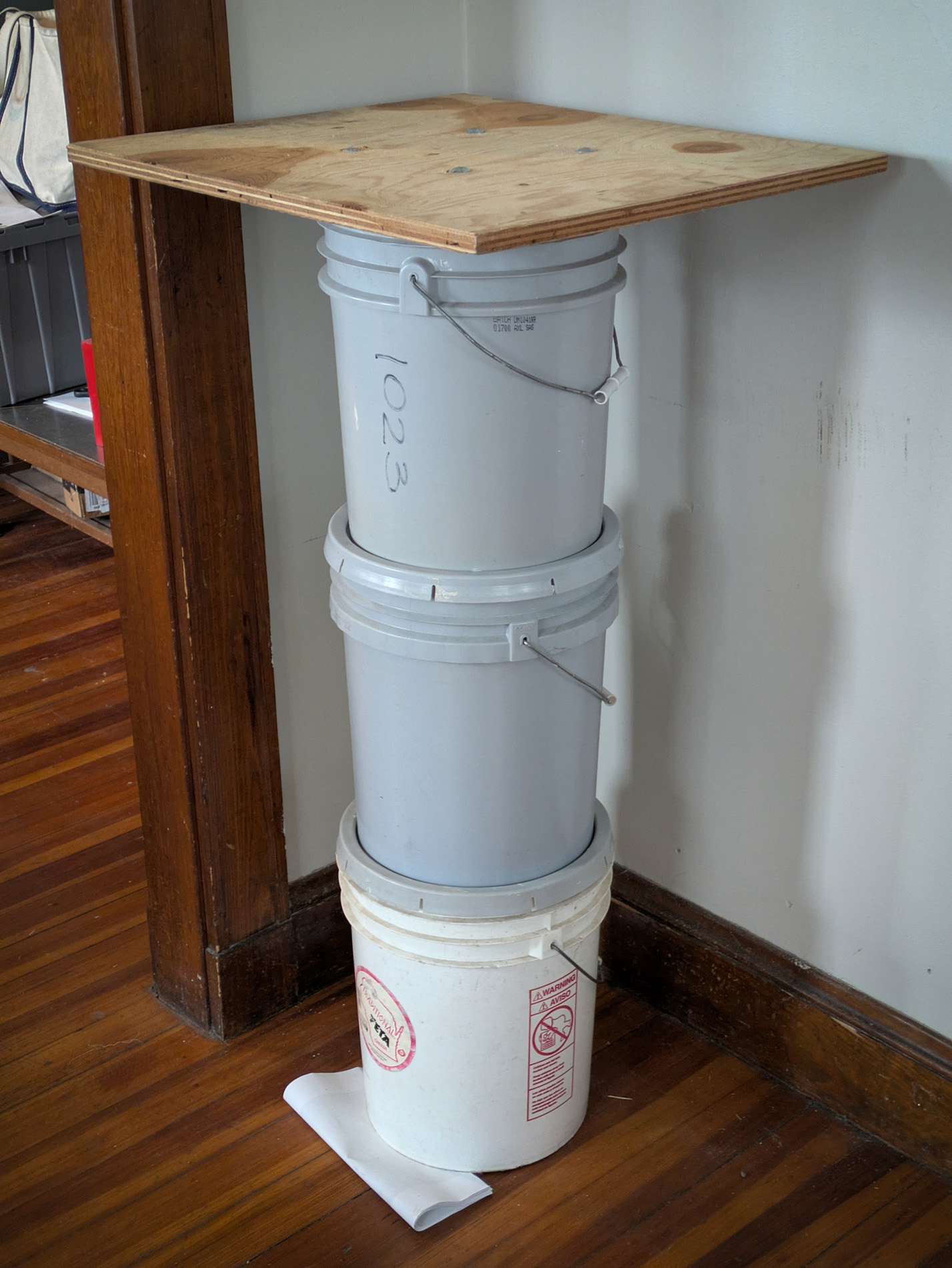
Many gallery spaces do not have enough pedestals for sculpture: best to roll your own.
The pedestals consist of PVC buckets, bolted together lid-to-base, with wingnuts and bolts. They stack three high, I fill the bottom bucket with water for stability. The top lid has a rectangular plywood table top held on with carriage bolts. The bare pedestals are then covered with a neutral gray slipcovers I sewed.

While this is clever way to work, it does have one disadvantage – the slipcovers are difficult to store without wrinkling. Since it’s been over ten years since I used these, all five slipcovers needed ironing. Making things silky smooth can be very rewarding and relaxing – but when time is tight it can get a little stressful.
After the pedestals were fully constructed and the placement of each pedestal was determined, each one needed to be leveled, as the house I live in is 125 years old and no part of the floors are truly level. Since my work doesn’t have bases, this is a very important step, particularly in a crowded gallery space where lightly bumping into things is a fact of life.
Lighting is Everything with Sculpture
Lighting is always a very big part of setting up for a show. I don’t have track light in my home, so I relied on some old ideas I had back in the Ready Room Gallery. I had made a set of homemade lights from sawed-off LED flashlights with adjustable spot lenses. Each LED flashlight ran on one AA battery, but I rewired all of them to run on a single 12 volt DC transformer so it ran on household current.
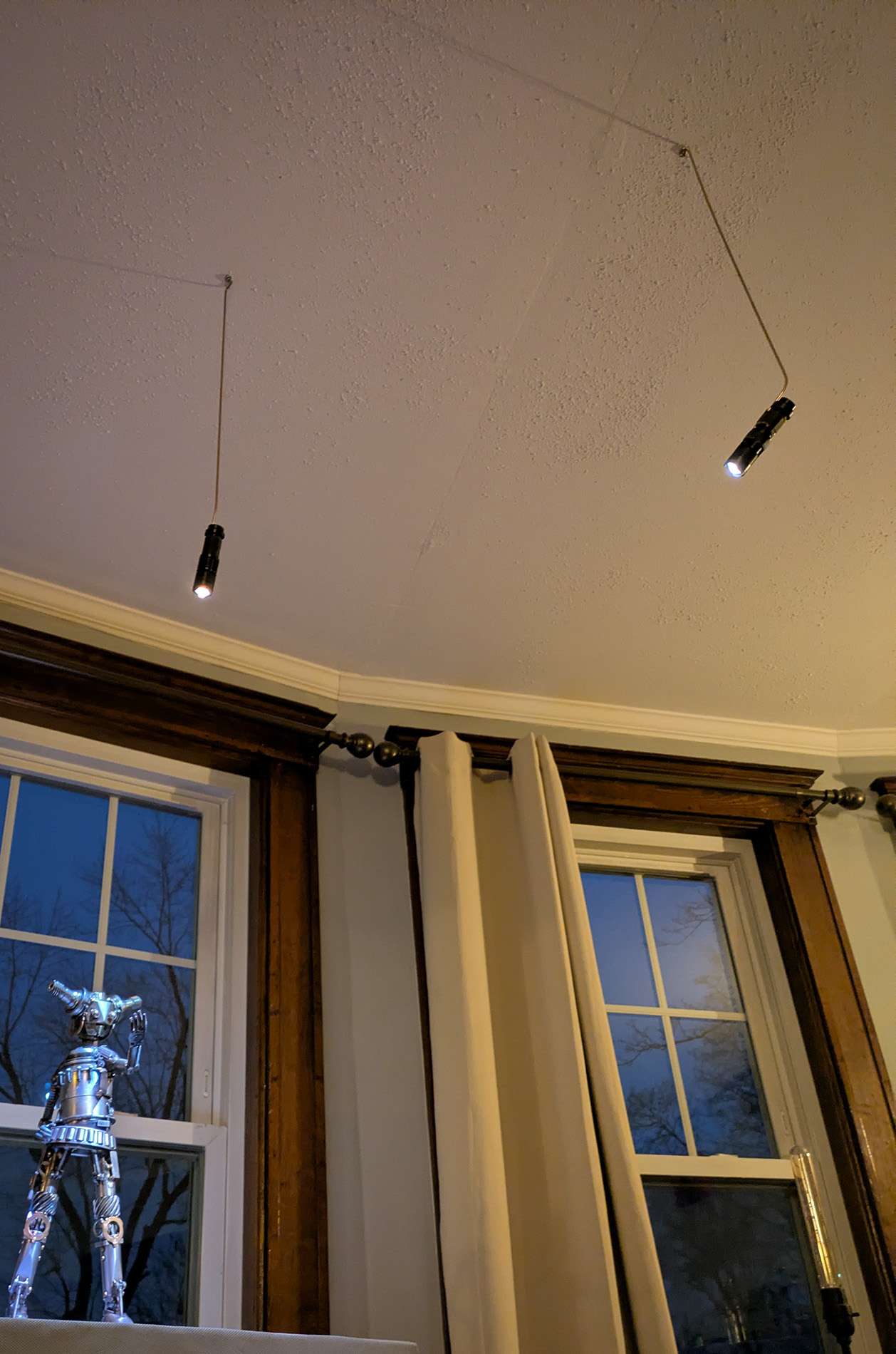
homegrown wireless track lights made from LED flashlights with adjustable spot lights
I have a different setup for this show than I had in my old gallery space, and there was no place to mount the old lights. I started to redesign the wiring for the new show – I got about an hour into the project when I realized that I could skip the sawing and rewiring and just use unaltered flashlights, since the show was only up for one night.
The next challenge was to figure out a way to suspend these lights in just the right positions around each pedestal without distracting the viewer. I experimented with a lot of different ways, and settled on suspending each light separately from the ceiling with a single bronze rod – the ones I use in my sculpture. they can be bent to the right angle, are very minimal and looked great.
One downside is that the LED bulbs used in the flashlight had a very cool temperature, which isn’t a good look for my work. After lots more experimentation with gels and filters, I found the best solution was to actually color each lens with an orange permanent marker. It worked reasonably well enough, but I may do something differently next time.
The Name Tags
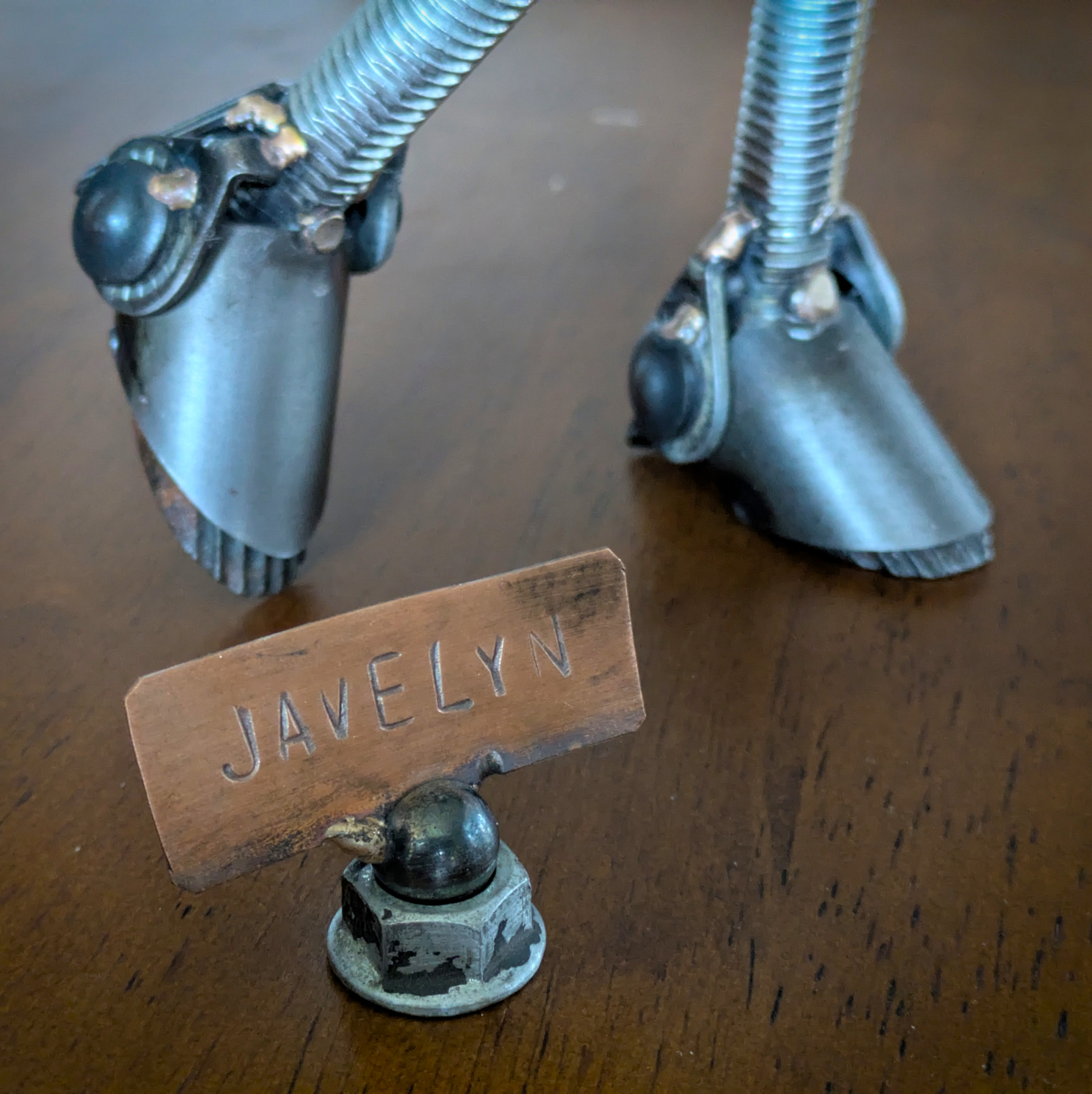
Normal gallery shows let their visitors know about each piece with a little printed tag on index paper. I was struggling to decide where such a tag would go on my fabric pedestals, which let me to rethinking them altogether. I spent some extra time making little display tags out of copper sheet, a ball bearing and a flange nut.
Act Two: The Show

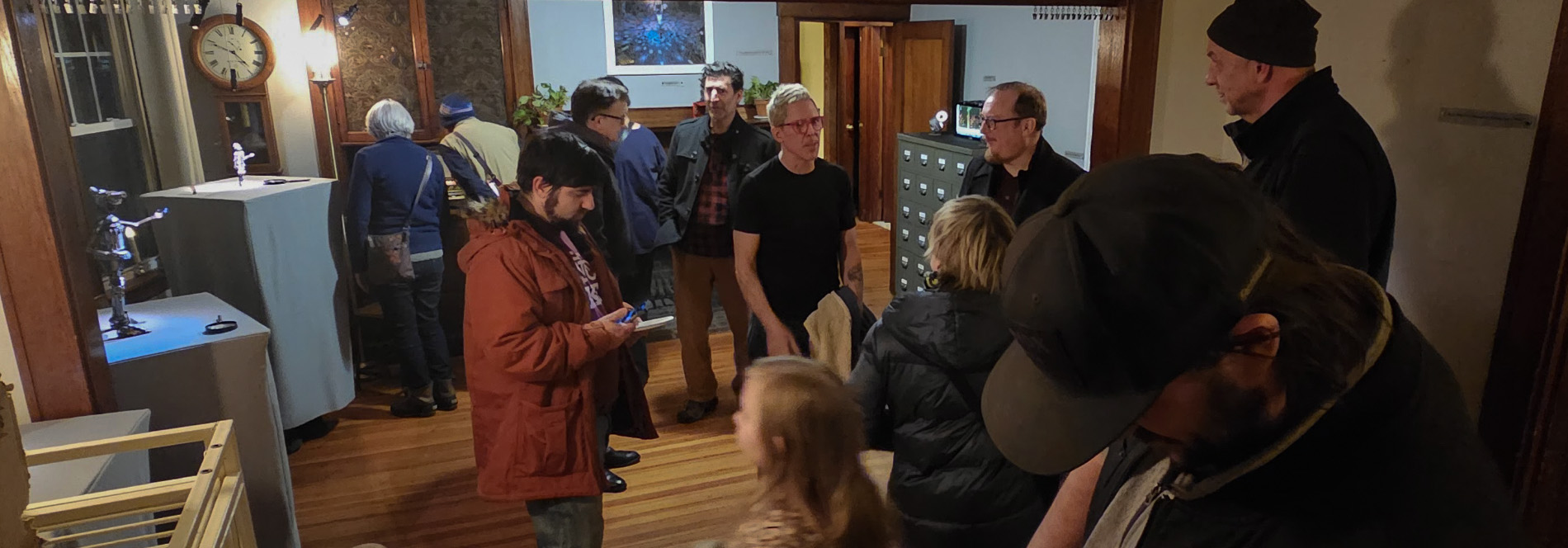
As I was working to promote the show, I began to have my doubts if enough of my old community would be willing to make it out to this grand event. Fortunately my fears were unfounded as we had a great turnout without it being so crowded to enjoy.
When I visit artists I often at a loss as to how to start a meaningful conversation: I’m nervous that I may as a question they’ve been asked hundreds of times, or a question that doesn’t make sense. In order to help people overcome this fear we came up with a bunch of ‘conversation starters’ that we pinned up around the space.
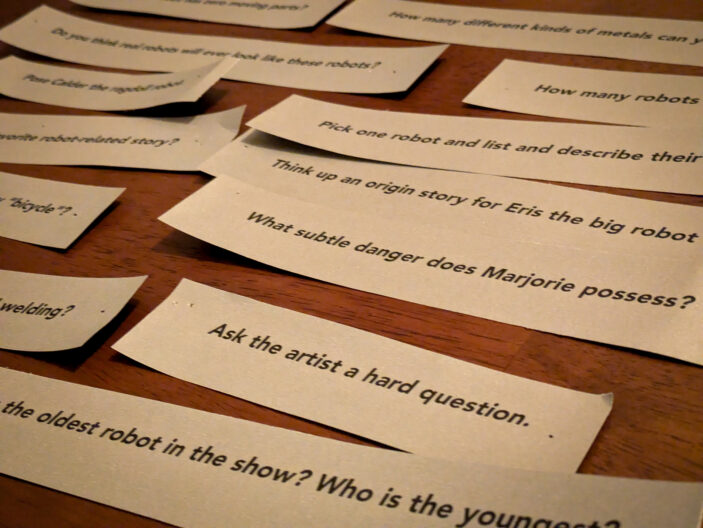
these conversation starters were placed around the space
My experience from having art shows since 2006 gave me a sense of what to expect from this one, but there was a lot about this show that surprised me. For one, the people I spoke with were much more engaged in discussion about art, craft, process, and ideas. I wasn’t hosting a booth at a group show where people’s first introduction to my art: this was a group of people who went through the extra effort to make it out to see Laark specifically.
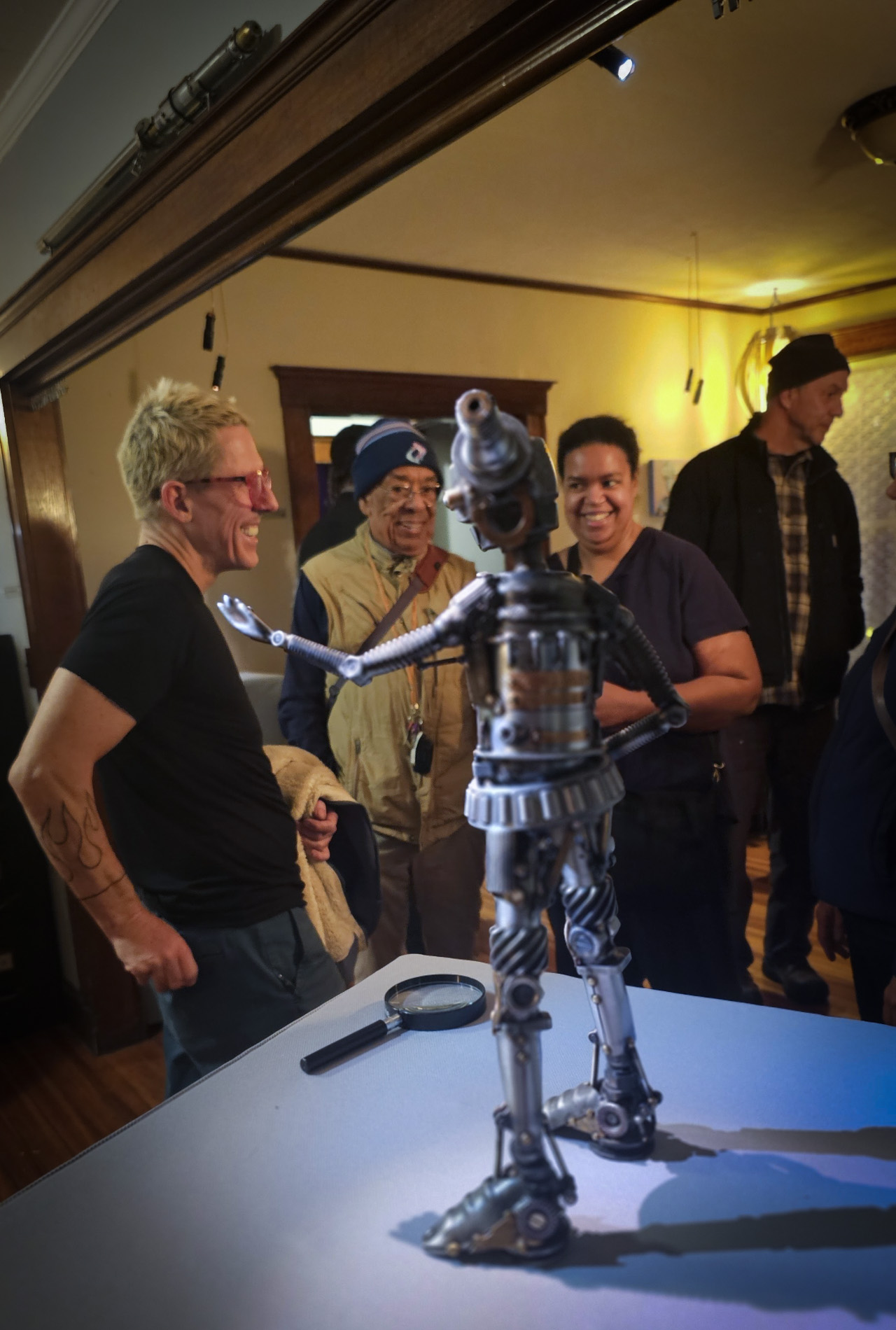
My two most detailed pieces each had a magnifying glass, inviting visitors to take a closer look
I am unaccustomed to people’s attention span being more than a second or two when it comes to absorbing content online. On more than one occasion when I began to explain what I was doing to someone attending the show, people would say “oh yeah, I read that on your website”. I was pleasantly taken off guard.
Act Three: Studio Tour and Demo
As promised, the event’s crescendo was the basement studio tour and weld demonstration.
My studio space is an extremely organized and clean space with racks of bins and drawers, making it intuitive for people who visit to imagine the workflow. There’s also a very nice welding setup.
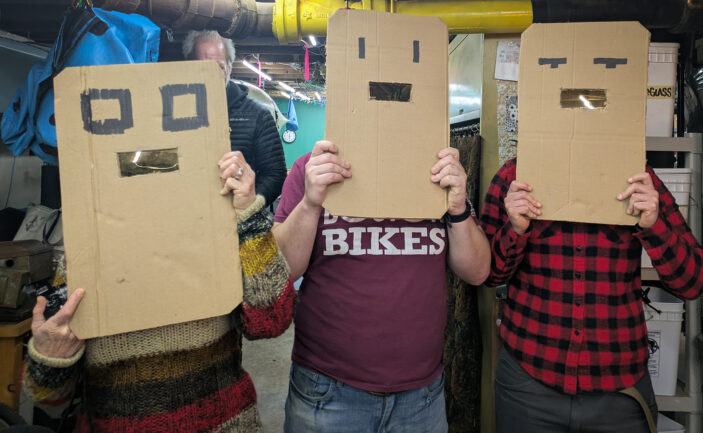
These cardboard weld masks help protect the eyes of observers – and look good doing it
When I was teaching TIG welding at the Artisan’s Asylum I made some easy to use weld shields for people to observe. I couldn’t resist adding some rudimentary cartoon faces.
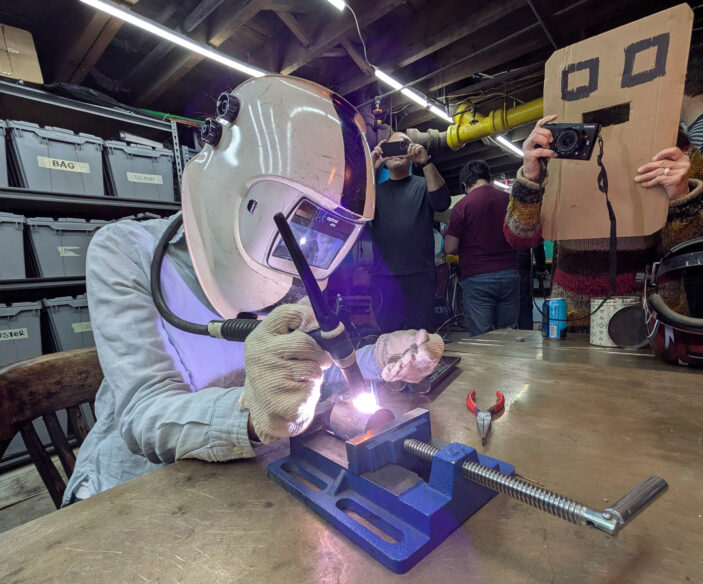
This one had some TIG welding hours behind her, but was reasonably new to thin-wall tubing. We had to make it harder for her by giving her gloves three sizes too big but she schooled us anyway.
Like all of my shows, this one went later than expected – the true mark of a successful event.
Act Four: Post-event Reflection
Taking down the show only took one morning. The pedestals were disassembled and emptied of their ballast, lighting was taken down, furniture was returned from their cramped hiding places in other rooms, and things returned to a more livable and familiar state. It was certainly fun to live in a gallery for a day.
A fellow artist friend of mine asked me the next day “was it everything I had hoped for?”. While it seemed like a simple question, I had no answer for her. I guess I had no particular expectations per se. I was only focused on putting together the best show I could, and didn’t focus on hopes. Some retro-active hopes could be connecting with others though my work, creating a conduit to connect people who would like to have my art in their life, and to stimulate new ways of thinking about what I’m doing.
Regrets? I’ve made a few
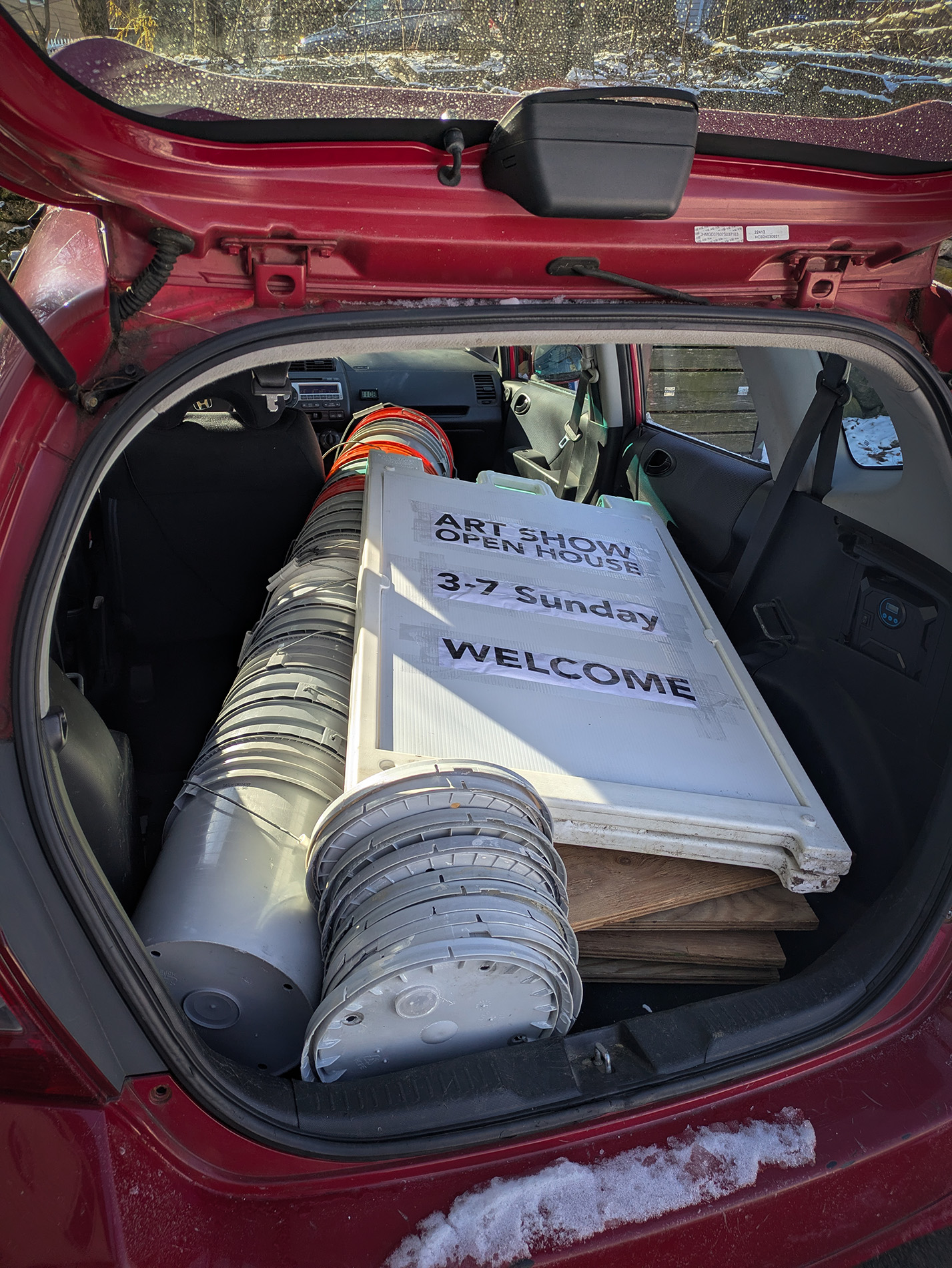
packing up the show offers time for self-reflection
I am certain I’m not the only one who reviews their conversations and actions with scrutiny – it’s a good tool to improve things for next time. What would I do differently next time?
I would have liked to have given myself more time to speak with all who visited. I would have paid more attention to the timetable, although I may be the only one concerned about that part. And I would have given myself more time to prepare. All this leads me to the conclusion that I need to keep practicing and have more shows.